


Cinderella Me guides
Covered heels, heel tips and soles: checks and repairs
Know the difference between the heel covering, replaceable tip and structural parts before arranging a repair.
Identify the part that is damaged
The covering on a heel may match the upper but is separate from the heel structure and the small tip that meets the ground. A platform is the raised sole under the forefoot. Ask which layer is marked, worn, lifting or loose; “heel damage” is too vague to assess a purchase.
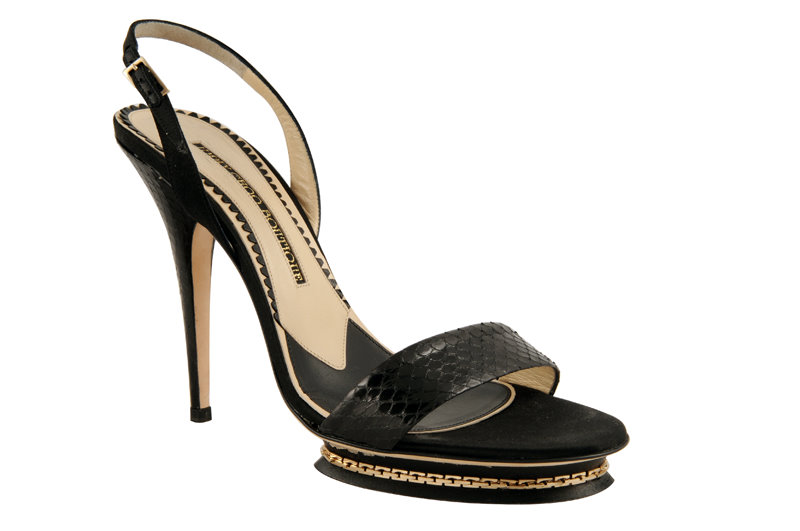
A product photograph from the CM catalogue. Check the listing for the exact size, materials, condition and current availability.
View productInspect before and after wear
- Look for a missing or uneven heel tip and damage extending above it.
- Check covered heels for scraped fabric, peeled leather or a separating seam.
- Inspect the join between upper and sole, including around a platform.
- Stop wearing the pair if a heel feels loose or a sole starts to separate, and arrange an assessment.
What to ask a repairer
Explain the material and send clear photographs. Ask whether the repair changes height, profile, colour or the original covering, whether matching parts are available, and what the estimate includes. Do not sand, glue or recolour a problem first: that may make assessment harder.
A sole mark is not a complete diagnosis
Christian Louboutin explains that wear to the lacquer on its traditional leather red soles is expected. That specific guidance does not mean every type of damage to every sole is harmless. Treat cosmetic wear, a protective sole added later and structural separation as separate facts. Confirm any proposed sole alteration with the maker or repairer.
Choosing the covered-heel look
A heel wrapped in the same material as the upper can give a continuous colour or texture to the shoe. A contrasting covering makes the heel a separate detail. Compare it with the outfit from the side and back, and consider how easily that exposed covering might contact steps or paving.