


Cinderella Me guides
Dior Shoes: Silhouette, Mixed Materials and Outfit Planning
A practical Dior footwear guide using catalogue examples to compare pumps, decorated sandals, mixed materials, fit questions and bags.
Historical context without a single style stereotype
Dior’s own history dates its first collection to 12 February 1947 at 30 Avenue Montaigne. The collection associated with the New Look placed particular emphasis on silhouette. That is a useful historical reference, but it does not mean all Dior shoes are understated, belong to that era or share one construction.
Look at the actual design before using broad labels such as “classic” or “evening”. A textile pump and a heavily decorated sandal can require very different clothing, care and fit decisions.
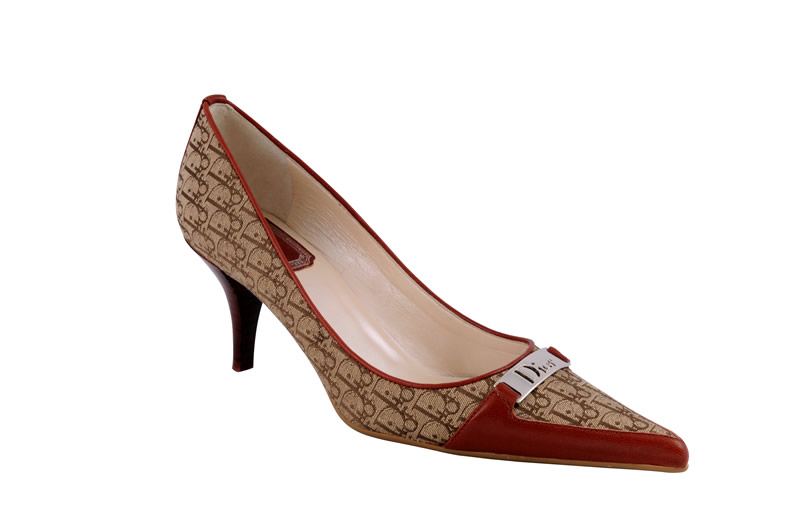
A product photograph from the CM catalogue. Check the listing for the exact size, materials, condition and current availability.
View productCompare a pump with a decorated sandal
The Diorissimo Brown catalogue example combines monogrammed fabric and leather trim. Dior Fur brings together multiple materials with an embroidered heel. These examples show why a house name should not replace a close reading of the item description.
For a closed pump, ask about the toe shape and heel retention. For an open sandal, compare strap placement and the position of the front opening. For a slingback or mule, consider how the shoe stays in place; for boots, establish opening measurements. A platform, if present, is not a guarantee of comfort or suitability for uneven ground.
Treat each material as its own care question
On mixed-material shoes, identify the upper, trim, heel covering and sole separately. Do not transfer advice for a leather panel to the adjacent textile or decoration. Where the composition or a stain is uncertain, ask for clarification or professional assessment before introducing water, cream, protector or heat.
Decorative surfaces also need thoughtful packing. Keep hardware and textured trim from pressing against neighbouring shoes, and do not force an embellished pair into a narrow compartment. A name such as “Fur” is not enough to identify the species or construction of a material.
Choosing an outfit and bag
For monogram fabric, try echoing one background colour in the clothing rather than adding another busy pattern. For a decorated sandal, a quieter hem and bag can give its materials room to be seen. These are optional outfit ideas, not a claim that a particular design is appropriate for every dress code.
An evening bag needs practical checks of its opening, strap and capacity. There is no need to buy a matching Dior bag to make the shoes work, and the existence of a bag guide should not be read as a promise that a particular bag is stocked.
Before ordering from the catalogue
The linked shoes are product examples from Cinderella Me’s catalogue. Confirm current size options and condition on the individual listing. If an image is labelled Styled Visual, use it for outfit context; inspect the original product photographs for the actual pair’s details.