


Cinderella Me guides
Jimmy Choo Shoes: Straps, Materials and Occasion Planning
Compare Jimmy Choo shoes through their actual construction and catalogue details, with practical questions about fit, finishes, outfits and bags.
From the house story to the individual shoe
Jimmy Choo’s official history dates the company’s founding to 1996, by shoemaker Jimmy Choo and Tamara Yeardye, now known as Tamara Mellon. Its roots lie in an East London atelier. The range extends beyond shoes, but that background does not make every shoe an evening sandal or every matching-looking bag part of the same collection.
Begin with what the design needs to do for you. A closed pump, boot, mule and ankle-strap sandal all frame the foot differently. Compare the opening, toe shape, fastening and heel position before deciding whether the overall look suits the occasion.
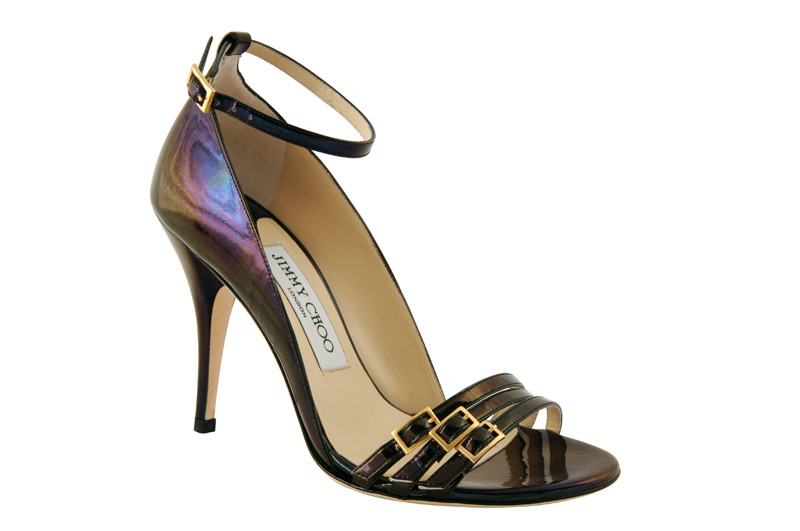
A product photograph from the CM catalogue. Check the listing for the exact size, materials, condition and current availability.
View productAxia shows why strap placement matters
Cinderella Me’s Axia listing describes a petrol pearlised patent sandal with three buckle-detailed toe straps and a slim ankle strap. The narrow bands and reflective finish are useful details to study in the original photographs. They do not tell you how the straps will sit on your own foot.
Ask which buckles adjust and whether the forefoot bands are fixed. Check the position of the little toe and the front edge during a careful indoor try-on, following the seller’s returns instructions. Do not assume a familiar Jimmy Choo size will behave identically in another shape or material.
Choose care by finish and construction
Jimmy Choo’s Archive care guidance specifically warns that satin can be damaged by friction and snagging. It provides different advice for suede. That distinction matters: do not apply a satin instruction, protector or cleaning liquid automatically to a patent or embellished shoe.
If the finish is uncertain, keep the pair away from potentially abrasive objects and ask for material-specific advice. For attached crystals, fabric bows or coated heels, the attachment and surface may need different treatment from the main upper. A product name alone is not a material specification.
Outfits and bags without a compulsory match
For Axia’s petrol tone, try a simple dark outfit or compare the shoe beside a softer neutral in daylight. A pearlised surface may appear different under event lighting, so test the whole outfit where possible. A hem that clears the straps keeps the construction visible.
A bag can echo a small piece of hardware or remain deliberately plain. Before choosing a compact evening style, check whether the opening and interior accommodate the essentials you intend to carry. A shared designer label does not guarantee matching colour, material or proportions.
Make the final check specific
The linked Axia photographs are catalogue examples, not customer testimonials. Use any labelled Styled Visual for outfit ideas and the original product views for the pair’s actual details.
- Confirm the stated size system and the currently selectable size.
- Read condition, heel-tip and fastening notes rather than assuming a uniform stock condition.
- Ask about any detail that remains hidden in the photographs before making a decision.