


Cinderella Me guides
Yves Saint Laurent Shoes: Names, Platforms and Outfit Planning
Place Yves Saint Laurent footwear in context and inspect the Origami platform example, with practical questions on materials, fit and styling.
Understanding the names on a listing
The house’s heritage account records its founding by Yves Saint Laurent and Pierre Bergé in 1961. It also records the ready-to-wear label’s change to Saint Laurent in 2012. Older catalogue descriptions may use Yves Saint Laurent; a name on its own does not reliably date a shoe or prove its origin.
Keep the documented history separate from the evidence for the pair you are considering. Ask about the item’s own labels, markings and provenance where needed, rather than assigning a collection from a logo or a remembered runway image.
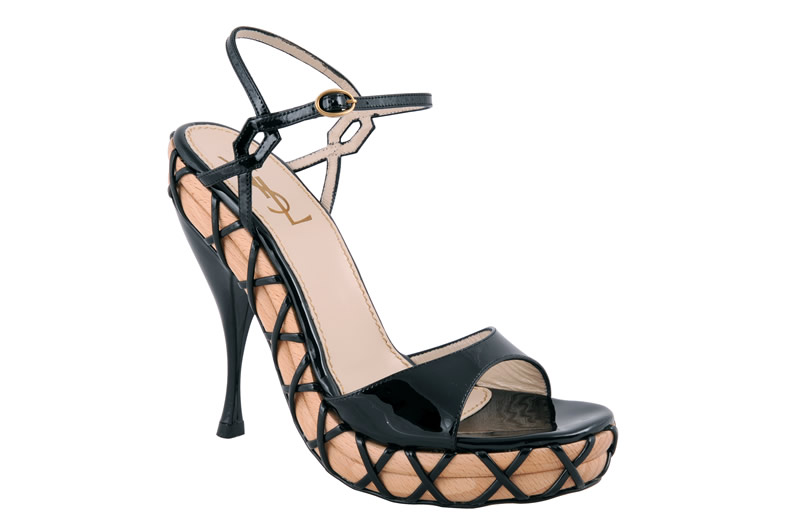
A product photograph from the CM catalogue. Check the listing for the exact size, materials, condition and current availability.
View productOrigami as a mixed-construction example
Cinderella Me’s Origami description records black patent straps and a whipstitched wooden platform. That combination gives the shoe several surfaces and joins to inspect. A side view is particularly helpful for seeing the platform edge, heel position and the connection between upper and sole.
For a platform sandal, compare the forefoot height, strap layout and fastening, not just the overall heel height. A platform does not automatically make a high shoe stable or comfortable. Ask about unclear measurements and choose according to the shape you can wear, rather than a general Saint Laurent sizing rule.
Different components, different questions
A wood-looking base, a glossy upper and visible stitching should not all receive the same cleaner. Confirm the recorded materials and any finish before choosing a treatment. Avoid soaking, improvised solvents or a repair that changes the join without professional advice.
Request close-ups of any split-looking line, abrasion or lifted edge rather than assuming it is part of the design. Check the fastening and heel tips as well as the decorative platform. Packing should keep the heavier base from pressing against another delicate shoe.
Tailoring and evening proportions
Try a platform beneath a trouser hem that clears the ground, or use a simpler dress to keep the mixed textures visible. The important test is the outfit in movement: a hem that looks right while standing may catch the shoe when walking or climbing stairs.
A structured bag can echo the shoe’s geometry, while a quieter clutch leaves the platform as the main feature. Neither choice needs a matching label. Check the event’s dress code, surfaces and carrying needs before deciding which combination is practical.
Read the example as an example
The linked Origami photographs are catalogue images, not customer submissions and not evidence that a size is currently available. Consult the product page for the exact pair’s options and condition. A labelled Styled Visual provides outfit context rather than a record of the stocked shoes being worn.